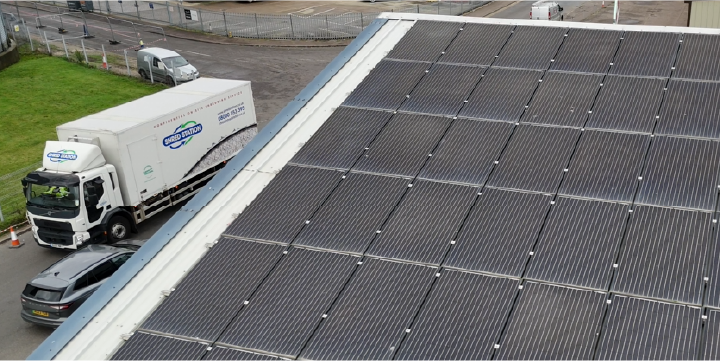
Shred Station replaces diesel forklifts with fully electric models.
At Shred Station, our environmental impacts are a top priority. All of our trucks meet Euro 6 low-emission standards, and we have added several electric trucks to our fleet as part of our Carbon Reduction Plan. But what about our vehicles that aren’t out on the road?
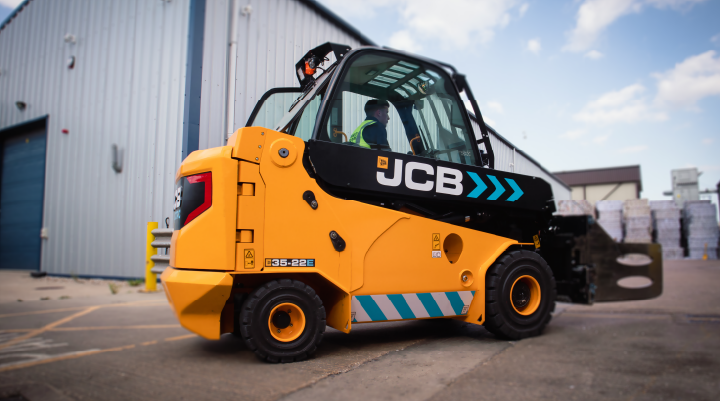
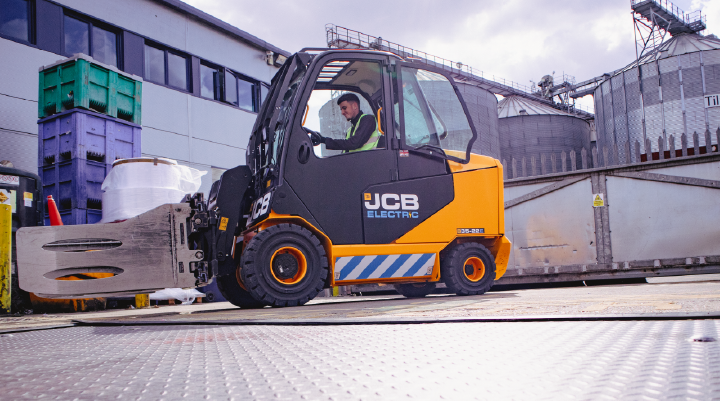
Our forklifts are in constant use. To reduce our emissions even further, we are replacing our diesel forklifts with an exciting electric model – the JCB E-Tech Electric Teletruk.
What are the key features of the forklift?
The JCB Electric Teletruk can work for a full eight hours on a single charge. With the JCB LiveLink telematics system, it’s also possible to check out real-time energy consumption. We can now report on how much power we’re using and optimise our charges.
The new electric Teletruk also has numerous safety benefits. The single-level control allows for easier and safer operation, as does the 360-degree field of vision around the machine. As the Teletruks are fully electric, they are much quieter than the diesel models, so they are healthier for the forklift operators’ hearing.
What difference will this make in terms of the environment?
When we destroy your confidential paperwork, it goes into our industrial shredders. Once shredded, it is baled by a state-of-the-art baling machine. These bales, which weigh between 600kg and 700kg, need to be stacked and continuously moved to keep our warehouse spaces safe. This means our forklifts run constantly throughout the day, both moving the bales and loading them into trucks to be whisked away to recycling mills.
Because our forklifts are in constant use, they use a significant amount of fuel – roughly 200 litres a week of diesel per forklift! Over the space of a year, that’s a colossal 10,400 litres each.
Diesel usage is a big contributor to carbon emissions, with one litre of diesel producing around 2.62kg of CO2. This is 0.23kg higher than petrol. With this in mind, we knew that substantial emission reduction could be achieved by reducing our forklift emissions.
So far, we’ve replaced 7 diesel forklifts with fully-electric models, reducing our diesel usage by approximately 72,800 litres per year. This equates to roughly 190 tonnes of CO2 – a massive environmental saving.
How will we charge the new forklifts?
It’s all well and good buying electric vehicles, but if you are charging them using diesel-powered generators or unclean energy, key environmental benefits are lost.
Shred Station’s Norwich depot uses solar panels, but we’ll also be using industrial Tensor batteries. Tensor’s rechargeable batteries use lead-acid technology. This means that, at the end of their life, they are fully recyclable, unlike many other industrial batteries. The batteries are long-life, highly efficient, and also have fast-charging capability.